
Product Description
AG Spreader, Grain Processing, Asphalt Paving, Sanding Truck Conveyor, Car Wash Conveyor, Forest Products
Model: 662,667X,667H,667J,667K,88K,D205,662H,667HX,D88C
Pack Detail:
Company Detail:
Choose TAI
1. TAI with sophisticated CNC equipment, advanced technology and perfect inspection equipment produce all kinds of chains, sprockets and other transmission equipments which can make the customers’ trust. The company since its establishment has passed ISO9001 and other certifications.
2. “High quality, high benefit, high standards” to sing more integrated into the world. Adhering to the “good faith service to customers” purposes, from being in order to after-sales service, each bit closely link, TAI will provide the most intimate, comprehensive service.
3. “Meet the customers’ requirement, until customers’ satisfaction” is our goal from start to finish, better innovation and better cooperation can create better TAI to service the world. Let us work together, to create a better future with each other.
Welcome contact for more details.
Ava Gao(Sales)
Tran-Auto Industries Co.,Limited
716 Gold River Center,NO.88 Shishan Rd.,
New District,HangZhou,P.R.China.P.C.:215011
tran-auto
| Chain No | Pitch | Ultimate tensile strength | Weight |
| mm | KN | kg/m | |
| 205 | 31.75 | 12.5 | 0.58 |
| 662 | 42.27 | 37.8 | 1.6 |
| 667X | 57.15 | 66.7 | 3.13 |
| 667H | 58.75 | 42.26 | 1.7 |
| 667J | 57.15 | 62.28 | 2.7 |
| 667K | 57.15 | 108.99 | 3.94 |
| 667XH | 57.15 | 124.6 | 4.48 |
| 88K | 66.27 | 108.99 | 3.91 |
| 308C | 78.11 | 222.42 | 9.8 |
| Material: | Carbon Steel |
|---|---|
| Structure: | Welded Chain |
| Surface Treatment: | Polishing |
| Chain Size: | 1/2"*3/32" |
| Feature: | Heat Resistant |
| Structure (for Chain): | Pintle Chain |
| Customization: |
Available
| Customized Request |
|---|
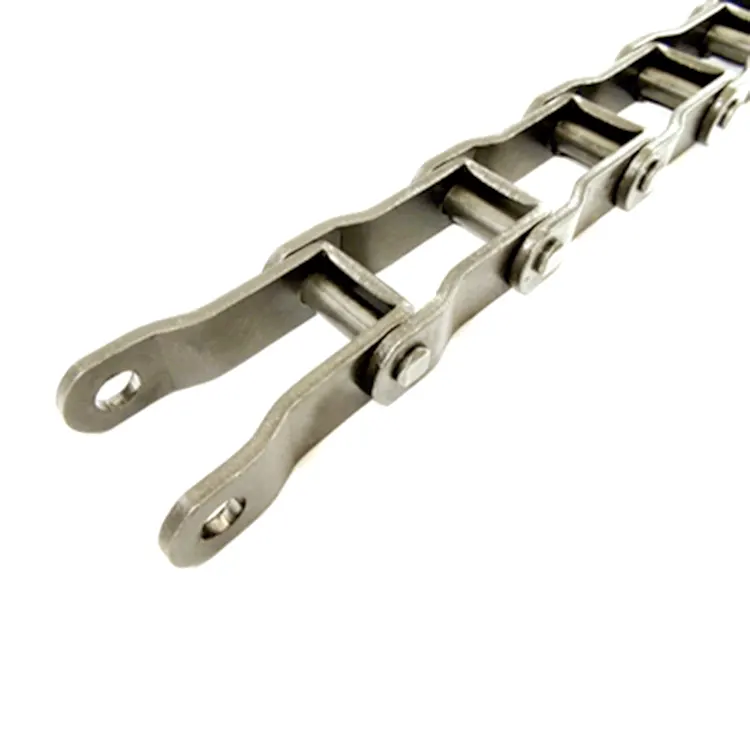
Can pintle chains be used for power transmission in industrial machinery?
Yes, pintle chains can be used for power transmission in various industrial machinery applications. Pintle chains are a type of roller chain that consists of interconnected link plates and pins. They are designed to handle heavy loads and provide reliable power transmission in demanding environments.
Power Transmission:
Pintle chains are commonly used in power transmission systems where rotary motion needs to be transferred from one shaft to another. They can transmit power efficiently and reliably, making them suitable for a wide range of industrial machinery and equipment.
Industrial Machinery Applications:
Pintle chains find applications in different types of industrial machinery, including but not limited to:
- Conveyors: Pintle chains are utilized in conveyor systems for moving bulk materials, such as in mining, agriculture, and manufacturing industries.
- Material Handling Equipment: Pintle chains are used in various material handling equipment, such as bucket elevators, apron conveyors, and drag conveyors.
- Forest and Timber Equipment: Pintle chains are employed in machinery used for log handling and processing in the forestry industry.
- Agricultural Equipment: Pintle chains are used in agricultural machinery like combine harvesters, balers, and manure spreaders.
- Mining Machinery: Pintle chains are suitable for heavy-duty applications in mining equipment like crushers, screens, and feeders.
Benefits for Power Transmission:
Pintle chains offer several advantages for power transmission in industrial machinery:
- Strength and Durability: Pintle chains are designed to handle heavy loads and provide long-lasting performance even in harsh environments.
- High Efficiency: Pintle chains have low friction, which results in efficient power transmission and reduced energy loss.
- Wide Speed Range: Pintle chains can operate at a wide range of speeds, making them suitable for various applications.
- Easy Maintenance: Proper maintenance, including regular lubrication and tension adjustments, can extend the life and performance of pintle chains.
In conclusion, pintle chains are versatile and reliable components for power transmission in industrial machinery. Their strength, durability, and efficiency make them suitable for a wide range of applications, ensuring smooth and reliable operation in demanding industrial environments.
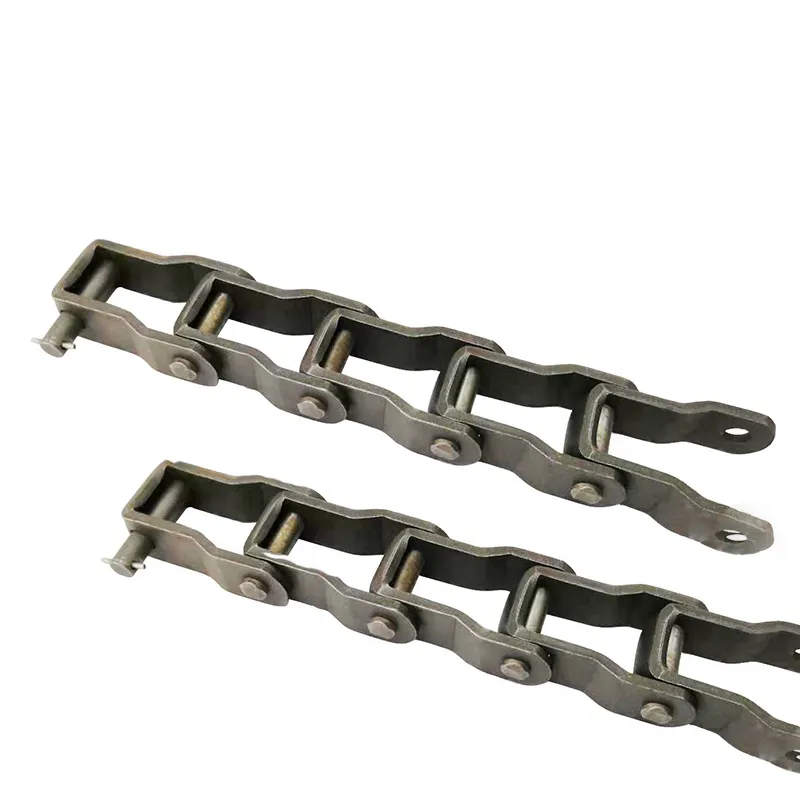
Can pintle chains be used in material handling and conveyor systems?
Yes, pintle chains are commonly used in material handling and conveyor systems across various industries. Their robust design and versatile characteristics make them well-suited for handling bulk materials, heavy loads, and challenging operating conditions in conveyor applications.
Advantages in Material Handling:
Pintle chains offer several advantages in material handling and conveyor systems:
- High Strength: Pintle chains are manufactured using durable materials, such as carbon steel or stainless steel, providing excellent strength and load-carrying capacity. This allows them to handle heavy loads and withstand the demands of material handling applications.
- Flexibility: Pintle chains can flex and articulate, enabling them to navigate through conveyor curves and various conveyor layouts. This flexibility allows for smooth material flow and efficient operation.
- Abrasion Resistance: The materials used in pintle chains are often chosen for their resistance to wear and abrasion, which is crucial in material handling applications where chains may come into contact with abrasive materials.
- Reliability: Pintle chains have a strong and reliable design, reducing the risk of chain failure and unplanned downtime in conveyor systems.
- Wide Range of Attachments: Pintle chains can be equipped with a variety of attachments, such as scrapers, cleats, or buckets, to suit specific material handling requirements.
Applications:
Pintle chains find applications in various material handling and conveyor systems, including but not limited to:
- Mining: Pintle chains are used in mining operations to transport bulk materials like coal, ore, or aggregates from one location to another.
- Agriculture: In agricultural settings, pintle chains are utilized in conveyor systems to handle crops, grains, and other agricultural products.
- Construction: Pintle chains are employed in construction sites to move construction materials, such as sand, gravel, and concrete.
- Waste Management: Pintle chains play a role in waste management and recycling systems to handle and sort waste materials.
- Food Processing: Pintle chains are used in food processing facilities to convey food products during various stages of production.
- Automotive: Pintle chains are found in automotive manufacturing to move components along assembly lines.
Proper Maintenance:
To ensure the longevity and optimal performance of pintle chains in material handling and conveyor systems, regular maintenance is essential. Regular inspection, lubrication, and timely replacement of worn-out components are crucial steps in maintaining the reliability of the chain and conveyor system as a whole.
In conclusion, pintle chains are a popular choice for material handling and conveyor systems due to their strength, flexibility, and reliability. They are widely used in diverse industries to facilitate the movement of various materials efficiently and effectively.
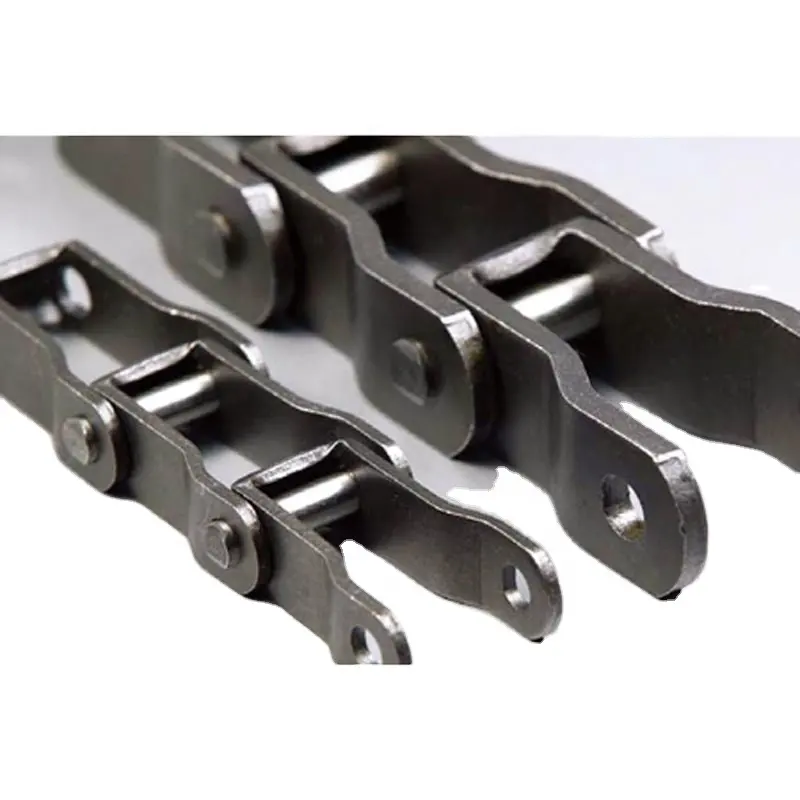
How do you select the right size and strength for a pintle chain?
Selecting the right size and strength for a pintle chain involves considering several factors to ensure optimal performance and longevity. Here’s a more detailed explanation of the selection process:
- Load Requirements: Determine the maximum load the pintle chain will need to carry. This includes both static and dynamic loads. Consider the weight of the conveyed material or the tension in the system for power transmission applications.
- Pitch Size: Measure the distance between each pintle pin center to the next. This measurement is known as the pitch size. Choose a pintle chain with a pitch size that matches the sprocket’s pitch diameter to ensure proper engagement and smooth operation.
- Chain Strength: Based on the calculated maximum load, select a pintle chain with adequate tensile strength to handle the load without risking chain failure or deformation. Consult the chain manufacturer’s documentation for strength ratings and specifications.
- Number of Strands: For applications requiring higher load capacities, you may need to use multiple strands of pintle chains. Determine the number of strands based on the load distribution required for the specific application.
- Environmental Factors: Consider the operating environment of the pintle chain. If the chain will be exposed to corrosive substances, moisture, or extreme temperatures, choose a material that provides suitable resistance to these environmental factors (e.g., stainless steel for corrosion resistance).
- Speed: Evaluate the speed of the application. Higher speeds may require pintle chains with better fatigue resistance and precision manufacturing to maintain performance.
- Maintenance: Assess the maintenance schedule and accessibility for lubrication and inspection. Proper maintenance is essential for maximizing the life and performance of the pintle chain.
It’s important to consult the manufacturer’s documentation and engineering guidelines to ensure the selected pintle chain meets the specific requirements of the application. Additionally, working with experienced engineers or chain specialists can provide valuable insights and assistance in selecting the right pintle chain for the intended use.
In summary, selecting the right size and strength for a pintle chain involves considering the load requirements, pitch size, chain strength, environmental factors, speed, and maintenance schedule to ensure optimal performance and reliability in the intended application.


editor by CX 2023-11-30