
Product Description
Standard Double Pitch Conveyor Chain Double Pitch Pintle Drag Drive Roller Conveyor Sprocket Chain For Food Machine
Product Description
Roller chain or bush roller chain is the type of chain drive most commonly used for transmission of mechanical power on many kinds of domestic, industrial, and agricultural machinery, including conveyors, wire- and tube-drawing machines, printing presses, cars, motorcycles, and bicycles. It consists of a series of short cylindrical rollers held together by side links. It is driven by a toothed wheel called a sprocket. It is a simple, reliable, and efficient means of power transmission. ANSI Standard Short Pitch Power Transmission Roller Chains are the most popular chains for driving, transmission reduction, tension, shuttle traction, and other applications.
Product Parameters
| Transmission chain (Driving Chain) | Short Pitch Precision Roller Chain (A Series)(1,2,3) | 04C-1 06C-1-2-3 085-1-2-3 08A-1-2-3 10A-1-2-3 12A-1-2-3 16A-1-2-3 20A-1-2-3 24A-1-2-3 28A-1-2-3 32A-1-2-3 40A-1-2-3 48A-1-2-3 |
| 25 35 35-2 35-3 -2 40-3 50 50-2-50-3 60 60-2 60-3 80 80-2 80-3 100 100-2 100-3 120 120-2 120-3 140 140-2 160 160-2 -2 240 | ||
| Short Pitch Precision Roller Chain (B Series)(1,2,3) | 06B-1-2-3 06B-1-2-3 08B-1-2-3 10B-1-2-3 12B-1-2-3 16B-1-2-3 20B-1-2-3 24B-1-2-3 28B-1-2-3 32B-1-2-3 40B-1-2-3 48B-1-2-3 56B-1-2-3 64B-1-2-3 72B-1-2-3 | |
| Heavy Duty Series Roller Chain(1,2) | 08AH-1 10AH-1 12AH-1-2-3 16AH-1-2-3 20AH-1-2-3 24AH-1-2-3 28AH-1-2-3 32AH-1-2-3 40AH-1-2-3 | |
| Side Bow Chain | 40SB 43SB 50SB 60SB 63SB 80SB 08BSB 08BSBY1 10BSB 12BSB C2050SB | |
| Motorcycle Chain | 410 415 415H 420 420H 428 428H 520 520H 525 525H 530 530H 630 630H | |
| Engine Mechanism Chain (Timing Chain) | CL04 | |
| Self-Lubrication Roller Chain | 08BSLR 10BSLR 12BSLR 16BSLR 40SLR 50SLR 60SLR 80SLR | |
| Double Pitch Transmission Chain | 208A 208B 210A 210B 212A 212B 216A 216B 220A 220B | |
| 2040 2050 2060 2080 2100 | ||
| Bush Chain | P15F-B P20-B P25-B P25F1-B P30F2-B P36-B P40-B P45-B P50-B P55-B P60-B P70-B P80-B | |
| Conveyor Chain | Roller Chain With Straight Side Plates (A Series) | C08A-1-2-3 C10A-1-2-3 C12-1-2-3 C24A-1-2-3 C32A-1-2-3 |
| C35 C40-1-2-3 C50-1-2-3 C80-1-2-3 C100-1-2-3 C120-1-2-3 C140-1-2-3 C160-1-2-3 | ||
| Roller Chain With Straight Side Plates (B Series) | C08B-1-2-3 C10B-1-2-3 C12B-1-2-3 C16-1-2-3 C20B-1-2-3 C24B-1-2-3 C28B-1-2-3 C32B-1-2-3 | |
| Double Pitch Conveyor Chain | C208A C208AH C208B C208BL C210A C210AL C212A C212AH C212AHL C216A C216AL C216AH C216AHL C220A C220AL C220AH C220AHL C224A C224AL C224AH C224AHL C232A C232AL C232AH C232AHL | |
| C2050 C2052 C2060 C2062 C2060H C2080 C2080H C2082 C2082H C2100 C2100H C2102 C2102H C2120 C2120H C2122 C2122H C2160 C2160H C2162 C2162H | ||
| Double Pius Speed Chain | BS25-C206B BS25-C208A BS25-C210A BS25-C212A BS30-C206B BS30-C208B BS30-C210B BS30-C212B | |
| Conveyor Chain (M Series) | M20 M28 M40 M56 M80 | |
| Hollow Pin Conveyor Chain (MC Series) | MC28 MC56 MC112 MC224 | |
| Conveyor Chain (FV Series) | FV40 FV63 FV90 FV112 FV140 | |
| Conveyor Chain (FVT Series) | FVT40 FVT63 FVT90 FVT112 FVT140 FVT180 FVT250 FVT315 | |
| Hollow Pin Conveyor Chain (FVC Series) | FVC63 FVC90 FVC112 FVC140 FVC180 FVC250 FVC315 | |
| Conveyor Chain (Z Series) | Z40 Z100 Z160 Z300 | |
| Conveyor Chain (ZE Series) | ZE40 ZE100 ZE160 ZE300 | |
| Hollow Pin Conveyor Chain (ZC Series) | ZC21 ZC40 ZC60 ZC150 ZC300 | |
| Hollow Pin Chains | 08BHPF 08BHPF5 08BHP9 10BHPF3 10BHPF4 12BHPF2 12BHPF3 16BHPF3 16BHPF4 40HP 08BHPF7 08BHP 50HP 50HPF4 50H-HP 60HP 60HPF1 80HP 80HPF1 80HPF2 80H-HP 80HPF3 80HPF4 HB41.75F5 A2080HP | |
| Welded-type cranked link chains | WR78 WH78 WR82 WH82 WR106 WH106 WR110 WH110 WR111 WH111 WR124 WH124 WR132 WH132 WR150 WH150 WR155 WH155 WR157 WH157 WR78F5 WH78F4 WH124F1 WH111F1 | |
| Palm oil Chains | P101.6F2 P152F14 P152F17 P152F29 90R-S P101.6F64 P76.7 P152F31 | |
| Sugar mill chains | DH9063 DH2198 P152F93K2 P152F78K2 DH 0571 0 DH1796 P152F77-AS2 P203.2F9 | |
| Rubber gloves carrier chains | P100F155 P100F13 P100F139 P150/90 | |
| Lumber conveyor chains | 81X 81XH 81XHE 81XHH 81XHS 500R 441.100R | |
| Sharp top chains | 08AF34 08BF21 10AF8 41F6 06BF1 06BF37 08AF41 08BF44 08AF8… | |
| Stainless Steel Chain | Stainless Steel Short Pitch Precision Roller Chain(A Series) | 25SS-1 35SS-1 41SS-1 40SS-1 50SS-1 60SS-1 80SS-1 100SS-1 120SS-1 |
| Stainless Steel Short Pitch Precision Roller Chain(B Series) | 05BSS-1 06BSS-1 08BSS-1 10BSS-1 12BSS-1 16BSS-1 20BSS-1 24BSS-1 | |
| Stainless Steel Roller Chain With Straight Side Plates | C40SS-1 C50SS-1 C60SS-1 C80SS-1 C100SS-1 C120SS-1 C08BSS-1 C10BSS-1 C12BSS-1 C16BSS-1 C20BSS-1 C24BSS-1 | |
| Stainless Steel Double Pitch Transmission Chain | 2040SS 2050SS 2060SS 2080SS 2100SS 2120SS 208BSS 210BSS 212BSS 216BSS 220BSS 224BSS | |
| Stainless Steel Double Pitch Conveyor Chain | C2040SS C2040HSS C208BSS C2050SS C2060SS C2060HSS C2080SS C2080HSS C2100SS C2100HSS C2120SS C2120HSS | |
| Stainless Steel Hollow Pin Chain | 08BHFSS 40HPSS 50HPSS 60HPSS 12BHPSS 80HPSS C2040HPSS C2050HPSS C2060HPSS C2080HPSS HB50.8SS | |
| Stainless Steel Double Pitch Hollow Pin Chain | C2042HPSS C2052HPSS C2062HPSS C2082HPSS C2042H-HPSS C2052H-HPSS C2062H-HPSS C2082H-HPSS | |
| Lifting Chain | Car Parking Chain | 12AT-1 16AT-1-2 20AT-1-2-3 24AT-1-2 |
| Leaf Chain | LH0822 LH0823 LH571 LH0844 LH0846 LH 0571 LH1571 LH1571 LH1034 LH1044 LH1046 LH1066 LH1088 LH1222 LH1223 LH1234 LH1244 LH1246 LH1266 LH1288 | |
| BL422 BL423 BL434 BL444 BL446 BL466 BL488 BL522 BL523 BL534 BL544 BL546 BL566 BL588 BL622 BL623 BL634 BL644 BL646 BL666 BL688 | ||
| Multile Plate Bearing Pin Chain | LF30 MP50F2 MP50.8 MP70F1 MP70F2 MP70F3 MP80F1 MP90F1 MP90F2 MP110F1 | |
| Rollerless Lift Chain | 45-1 55-1 65-1 85-1 105-1 125-1 145-1 165-1 | |
| Agricultural Chain | S Type Steel Agricultural Chain & Attachments | S32 S42 S45 S52 S55 S62 S77 S88 A550 A620 |
| C Type Steel Agricultural Chain with Attachments | CA550 CA550/S55 CA555 CA550HD CA550V CA557 CA620 CA2801 38.1R 38.4R 38.4V 38.4VB | |
| Rice Harvester Chain | S3558T-48001 S3558T-48002 | |
| Drop Forged Chain Series | Drop Forged Rivetless Chain | Imperial: 80H X348 X458 468H X658 X678 678 698 998 9118 S348 S458 S678 S698 S9118, Metric system: XT100 XT160 |
| Cast Detachable Chain | 55 57 62 74 78 | |
| Steel Detachable Chain | 25 32 32W 51 52 55 62 | |
| Cast Iron Chain | Cast Iron Chain (C Series) | C55 C55L C77 C188 C188L C102B C111 C131 C132 |
| Cast Iron Chain (H Series) | H60 H78 H82 H110 | |
| Cast Iron Chain (4 Series) | 462 477 488 4103 720 720S 730 | |
| Cast Iron Chain BRH188 | BRH188 C188CP C102B-K2 C55A C55B C55D CC600 H78A H78B H130 H138 MC33 103 4103F29 907-E51 | |
| Welded chains | WR78 WH78 WR82 WH82 WR124 WH124 | |
| Forging Hanging Chain | X228 X348 X458 X678 698 |
Detailed Photos
FAQ
Q: Do you provide samples?
A: Yes. A sample is available for testing.
Q: What’s your lead time?
A: Standard products need 5-30days, a bit longer for customized products.
Q: Do you provide technical support?
A: Yes. Our company has a design and development team, and we can provide technical support if you
need.
Q: How to ship to us?
A: It is available by air, sea, or train.
Q: How to pay the money?
A: T/T and L/C are preferred, with different currencies, including USD, EUR, RMB, etc.
Q: How can I know if the product is suitable for me?
A: >1ST confirm drawing and specification >2nd test sample >3rd start mass production.
Q: Can I come to your company to visit?
A: Yes, you are welcome to visit us at any time.
Q: How shall we contact you?
A: You can send an inquiry directly, and we will respond within 24 hours.
|
Shipping Cost:
Estimated freight per unit. |
To be negotiated |
|---|
| Standard or Nonstandard: | Standard |
|---|---|
| Application: | Textile Machinery, Garment Machinery, Conveyer Equipment, Packaging Machinery, Electric Cars, Motorcycle, Food Machinery, Agricultural Machinery |
| Surface Treatment: | Chrome Plating |
| Samples: |
US$ 10/Meter
1 Meter(Min.Order) | Order Sample |
|---|
| Customization: |
Available
| Customized Request |
|---|
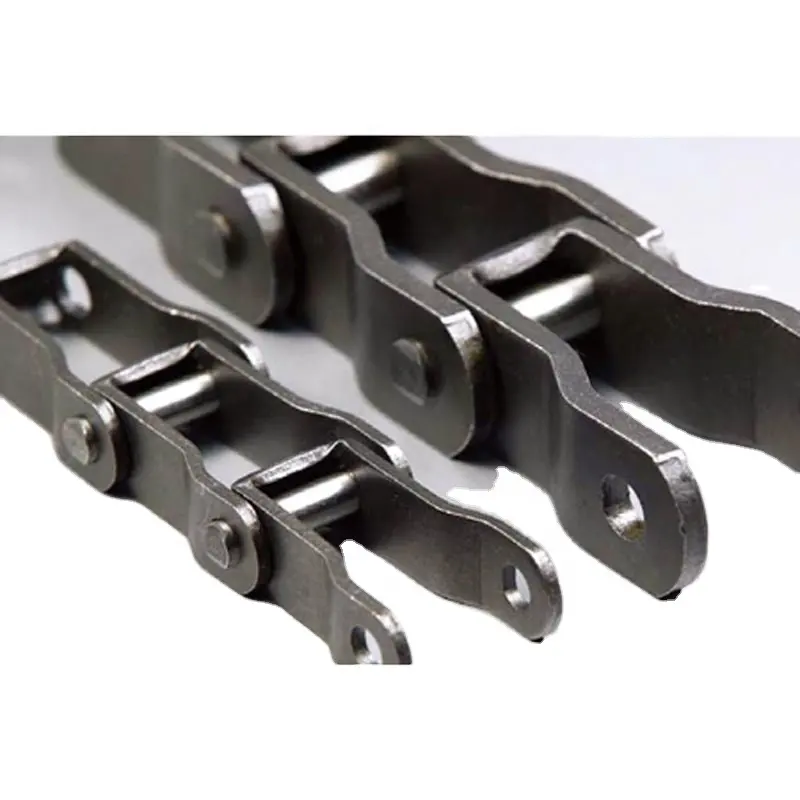
How do pintle chains handle misalignment between sprockets?
Pintle chains are designed to handle a certain degree of misalignment between sprockets, providing some flexibility in their operation. The ability to handle misalignment is essential in many industrial applications, where perfect alignment between sprockets may be challenging to maintain due to various factors.
Flexibility and Articulation:
Pintle chains are constructed with interlocking link plates and pins, which allow for some articulation between the chain links. This design enables the chain to bend and flex as it moves around the sprockets, accommodating slight misalignments without causing undue stress on the chain.
Compensating for Misalignment:
When pintle chains encounter misalignment between sprockets, they can adjust their shape slightly to compensate for the deviation. This feature helps to reduce wear on the chain, sprockets, and other components of the power transmission system.
Tolerance Limits:
However, it’s essential to note that pintle chains have specific tolerance limits for misalignment. Excessive misalignment beyond these limits can lead to premature wear and failure of the chain. Therefore, proper alignment during installation and regular maintenance to check for alignment issues are necessary to ensure optimal performance and longevity of the chain.
Guidelines for Proper Alignment:
To achieve the best performance and avoid premature wear, consider the following guidelines for proper chain alignment:
- Make sure sprockets are precisely aligned on their respective shafts.
- Check that the shafts supporting the sprockets are parallel and at the correct distance apart.
- Use appropriate tools and measurements to verify sprocket alignment during installation.
- Regularly inspect and adjust sprocket alignment if misalignment issues arise during operation.
Benefits of Proper Alignment:
Properly aligned pintle chains offer several benefits:
- Reduced Wear: Proper alignment minimizes wear on the chain and sprockets, increasing their lifespan.
- Smooth Operation: Optimal alignment ensures smooth and reliable chain movement, reducing the risk of chain jamming or skipping.
- Improved Efficiency: Correct alignment contributes to the overall efficiency of the power transmission system, reducing energy losses and improving performance.
In summary, pintle chains can handle some misalignment between sprockets due to their flexible and articulating design. However, maintaining proper alignment within the recommended tolerance limits is crucial for ensuring the longevity and reliable performance of pintle chains in industrial applications.

What are the limitations of using pintle chains in certain applications?
Pintle chains, while versatile and suitable for many industrial applications, do have some limitations that may affect their use in certain situations. These limitations include:
- Speed: Pintle chains are not ideal for high-speed applications. Their design and construction may limit the maximum speed they can operate at without experiencing excessive wear and fatigue.
- Precision: Pintle chains may not provide the same level of precision as other types of conveyor chains. In applications where precise positioning or indexing is critical, pintle chains might not be the best choice.
- Noise and Vibration: Pintle chains can produce more noise and vibration compared to other types of chains, which could be a concern in applications requiring quiet and smooth operation.
- Wear: While pintle chains are designed to be durable, they may experience more wear in certain conditions, such as when handling abrasive materials or operating in dirty and harsh environments.
- Complexity: Pintle chains have a more intricate design compared to standard roller chains, which can make them harder to assemble and disassemble, potentially increasing maintenance time and costs.
- Chemical Exposure: Pintle chains made of certain materials may not be suitable for applications involving exposure to aggressive chemicals or corrosive substances.
Despite these limitations, pintle chains remain a popular choice for many industrial applications due to their strength, durability, and versatility. It’s essential to carefully consider the specific requirements of the application and assess whether the characteristics of pintle chains align with the operational demands.
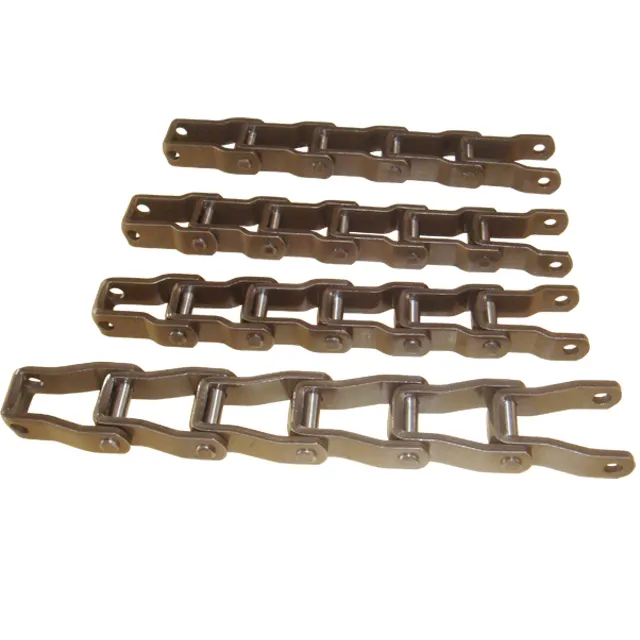
Can pintle chains handle heavy loads and provide reliable performance?
Yes, pintle chains are designed to handle heavy loads and provide reliable performance in various industrial applications. Here’s a more detailed explanation:
Pintle Chain Design: Pintle chains are constructed with robust materials and extended pins (pintles) that protrude from the roller link plates. This design allows for better load distribution and increased strength, making them suitable for heavy-duty applications.
Material Strength: Pintle chains are typically made from high-quality carbon steel or stainless steel, which enhances their tensile strength and resistance to wear and fatigue. These materials can withstand the stress and forces associated with heavy loads.
Link Plate Design: The link plates of pintle chains are usually thicker and more substantial compared to standard roller chains. This additional thickness enhances the chain’s ability to handle heavier loads without deformation or failure.
Extended Pins: The extended pintles in pintle chains provide a positive engagement with sprockets, minimizing the risk of slippage and ensuring a reliable drive even under heavy loads.
Applications: Pintle chains are commonly used in industries like agriculture, mining, construction, and wood processing, where heavy loads are prevalent. They are employed in various equipment, such as harvesters, conveyors, balers, and more.
Tough Environments: Pintle chains are known for their ability to withstand tough operating conditions, including high impact, abrasive materials, and corrosive environments. This durability ensures reliable performance even in harsh industrial settings.
Maintenance: Proper maintenance, such as regular lubrication and inspection, is essential to ensure the continued reliability and performance of pintle chains under heavy loads.
In summary, pintle chains are well-suited for handling heavy loads and providing reliable performance in a wide range of industrial applications. Their sturdy construction, extended pins, and high-quality materials contribute to their ability to withstand heavy loads and operate consistently under challenging conditions.


editor by CX 2023-07-27