
Product Description
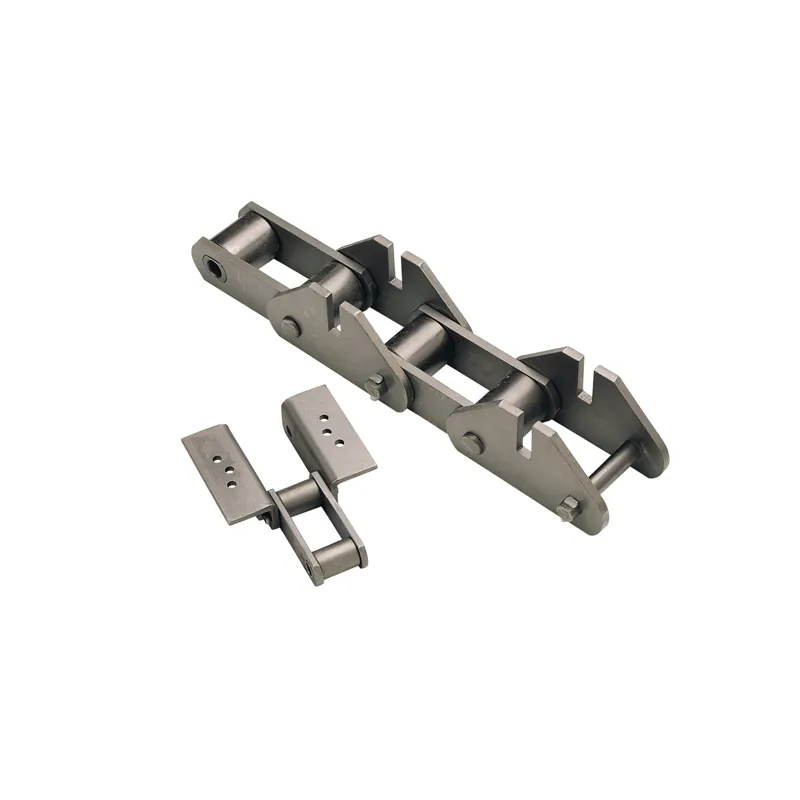
| MODEL | P | T | t | h | H | b | d |
| S16 | 100 | 30 | 15 | 27 | 8 | 16 | 14 |
| P102-W385 | 102 | 30 | 13 | 27 | 9 | 14 | 14 |
| RUS270 | 123 | 50 | 24 | 46 | 16 | 25 | 20 20.5 |
| Z20 | 125 | 50 | 24 | 48 | 15 | 26 | 20 |
| P140 | 140 | 78 | 31 | 50 | 19 | 32 | 25 |
| Z30 | 142 | 64 | 28.5 | 50 | 18 | 30.5 | 25 |
| 150 | 150 | 38 | 18 | 40 | 10 | 20 | 18 |
| P155 | 155 | 79 | 39.5 | 63.5 | 36 | 40.5 | 30 |
| Z25 | 160 | 58 | 28 | 55 | 18 | 30 | 25 |
| YD310 | 200 | 43 | 20 | 47 | 12 | 22 | 20 |
| A-3634 | 216 | 64 | 26 | 72 | 20 | 28.5 | 35 |
| X63 | 250 | 60 | 28 | 70 | 20 | 30 | 25 |
| P260 | 260 | 72 | 32 | 75 | 20 | 34 | 32 |
ZheJiang CHINAMFG Precision Casting and Forging Inc. was established in 2003, covering an area of 40,000 square meter with 300 employees. In 2571, the company passed the quality management system certification of GB/T 19001-2016 and ISO 9001:2015, and has a number of invention patents.It is a national high-tech enterprise.
Our main products are bucket teeth,side teeth,bucket adapter for excavator and loader; Forged pipe coupling for concrete pump ; Drop forged chain for scraper conveyor, etc. Other casting and forging parts canalsobecustomized accordingto customer drawings. The main materials are alloy steel, high manganese steel, gray iron, ductile iron, etc.
Our company can produce casting range in 0.1kg-2tons, forging range in 0.1kg-100kgs, casting and forging annual capacity of 10,000tons.From productdesign, mold development to heattreatment, machining and spraying, we provide the whole processof internal manufacturing to better control the cost and quality.
ZheJiang Plus Import and Export Trading Co., Ltd. was established in 2571, is Wanxin’s subsidiary, mainly responsible for marketing and export.
FAQ
Q1.Are you a manufacturer or a trading company?
we are totally manufacturer of machinery parts.
Q2.Can i get samples for checking the quality?
we can provide free samples,but you need to pay the freight.
Q3.What’s your MOQ?
For normal prodcuts,we don’t have MOQ.
For customerized products,we will tell you MOQ based on your drawing.
Q4.What’s your delivery time?
it’s about 7-45 days based on your quantity.
Q5.What’s your payment terms?
AmountAmount≥5000USD,T/T 30% as deposit,balance before delivery.
/* March 10, 2571 17:59:20 */!function(){function s(e,r){var a,o={};try{e&&e.split(“,”).forEach(function(e,t){e&&(a=e.match(/(.*?):(.*)$/))&&1
| Material: | Alloy |
|---|---|
| Structure: | Forging Chain |
| Surface Treatment: | Polishing |
| Chain Size: | 142 |
| Feature: | Heat Resistant |
| Process: | Forging |
| Samples: |
US$ 100/Piece
1 Piece(Min.Order) | |
|---|
| Customization: |
Available
| Customized Request |
|---|
What are the common industries that utilize pintle chains?
Pintle chains find extensive usage in various industrial sectors due to their durability, strength, and versatility. Below are some of the common industries that utilize pintle chains:
1. Agriculture:
Pintle chains are commonly used in agricultural equipment, such as combines, harvesters, and balers. They assist in conveying and processing crops and agricultural materials efficiently.
2. Construction:
In the construction industry, pintle chains are employed in heavy-duty equipment like excavators, bulldozers, and loaders to move and handle construction materials and debris.
3. Forestry:
Pintle chains are utilized in forestry equipment, such as chainsaws and log debarkers, to handle timber and wood processing tasks.
4. Material Handling:
Pintle chains are widely used in material handling equipment and conveyor systems, facilitating the movement of goods and products in warehouses and distribution centers.
5. Mining:
In the mining industry, pintle chains are employed in mining machinery to transport heavy loads of ores and minerals from extraction points to processing areas.
6. Automotive:
Pintle chains are found in automotive assembly lines, providing reliable and efficient transportation of car parts during the manufacturing process.
7. Recycling:
In recycling facilities, pintle chains are used in recycling equipment to process and handle various types of recyclable materials.
8. Food Processing:
Pintle chains are utilized in food processing equipment, especially in applications where robust and hygienic conveyance of food products is essential.
9. Pulp and Paper:
Pintle chains are employed in pulp and paper mills to transport wood chips, pulp, and paper rolls during the manufacturing process.
10. Packaging:
In the packaging industry, pintle chains are utilized in packaging machines and palletizers to handle and transport packaged goods efficiently.
11. Bottling and Beverage:
Pintle chains are used in bottling and beverage production lines to convey bottles and cans during the filling and packaging process.
12. Aerospace:
In the aerospace industry, pintle chains find application in manufacturing processes, moving components and parts through various stages of assembly.
13. Energy:
Pintle chains are used in energy generation facilities, such as power plants, to handle and transport fuel materials.
14. Chemical:
In chemical processing plants, pintle chains are employed in equipment to handle and convey various chemicals and raw materials.
15. Pharmaceuticals:
Pintle chains are used in pharmaceutical manufacturing and processing equipment, ensuring efficient and reliable movement of medications and products.
Overall, pintle chains are essential components in a wide range of industries, enabling efficient material handling, transportation, and processing tasks. Their robust design and reliable performance make them a preferred choice in many industrial applications.
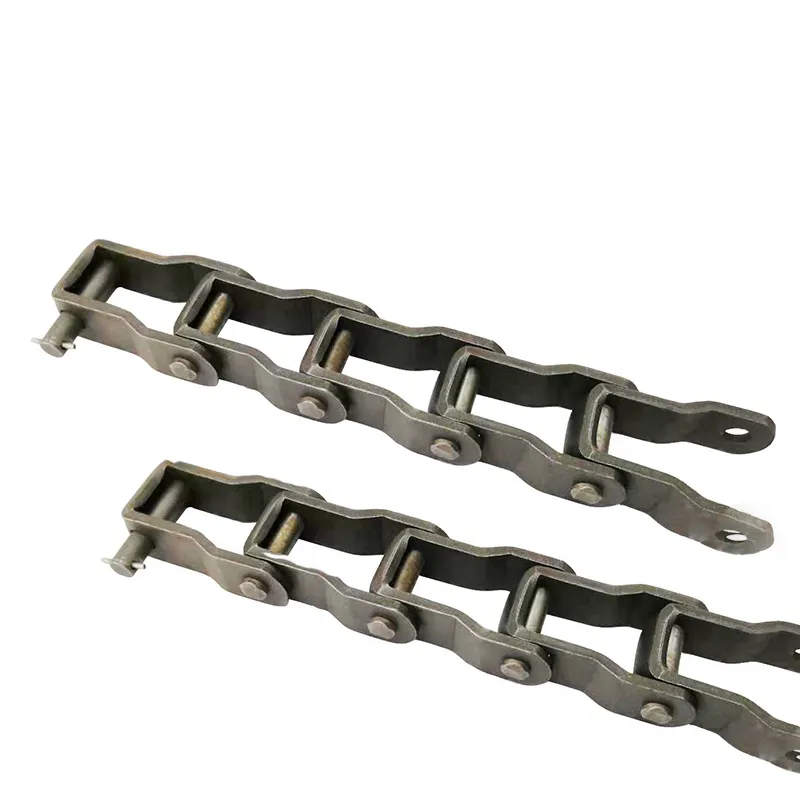
Can pintle chains be used in material handling and conveyor systems?
Yes, pintle chains are commonly used in material handling and conveyor systems across various industries. Their robust design and versatile characteristics make them well-suited for handling bulk materials, heavy loads, and challenging operating conditions in conveyor applications.
Advantages in Material Handling:
Pintle chains offer several advantages in material handling and conveyor systems:
- High Strength: Pintle chains are manufactured using durable materials, such as carbon steel or stainless steel, providing excellent strength and load-carrying capacity. This allows them to handle heavy loads and withstand the demands of material handling applications.
- Flexibility: Pintle chains can flex and articulate, enabling them to navigate through conveyor curves and various conveyor layouts. This flexibility allows for smooth material flow and efficient operation.
- Abrasion Resistance: The materials used in pintle chains are often chosen for their resistance to wear and abrasion, which is crucial in material handling applications where chains may come into contact with abrasive materials.
- Reliability: Pintle chains have a strong and reliable design, reducing the risk of chain failure and unplanned downtime in conveyor systems.
- Wide Range of Attachments: Pintle chains can be equipped with a variety of attachments, such as scrapers, cleats, or buckets, to suit specific material handling requirements.
Applications:
Pintle chains find applications in various material handling and conveyor systems, including but not limited to:
- Mining: Pintle chains are used in mining operations to transport bulk materials like coal, ore, or aggregates from one location to another.
- Agriculture: In agricultural settings, pintle chains are utilized in conveyor systems to handle crops, grains, and other agricultural products.
- Construction: Pintle chains are employed in construction sites to move construction materials, such as sand, gravel, and concrete.
- Waste Management: Pintle chains play a role in waste management and recycling systems to handle and sort waste materials.
- Food Processing: Pintle chains are used in food processing facilities to convey food products during various stages of production.
- Automotive: Pintle chains are found in automotive manufacturing to move components along assembly lines.
Proper Maintenance:
To ensure the longevity and optimal performance of pintle chains in material handling and conveyor systems, regular maintenance is essential. Regular inspection, lubrication, and timely replacement of worn-out components are crucial steps in maintaining the reliability of the chain and conveyor system as a whole.
In conclusion, pintle chains are a popular choice for material handling and conveyor systems due to their strength, flexibility, and reliability. They are widely used in diverse industries to facilitate the movement of various materials efficiently and effectively.
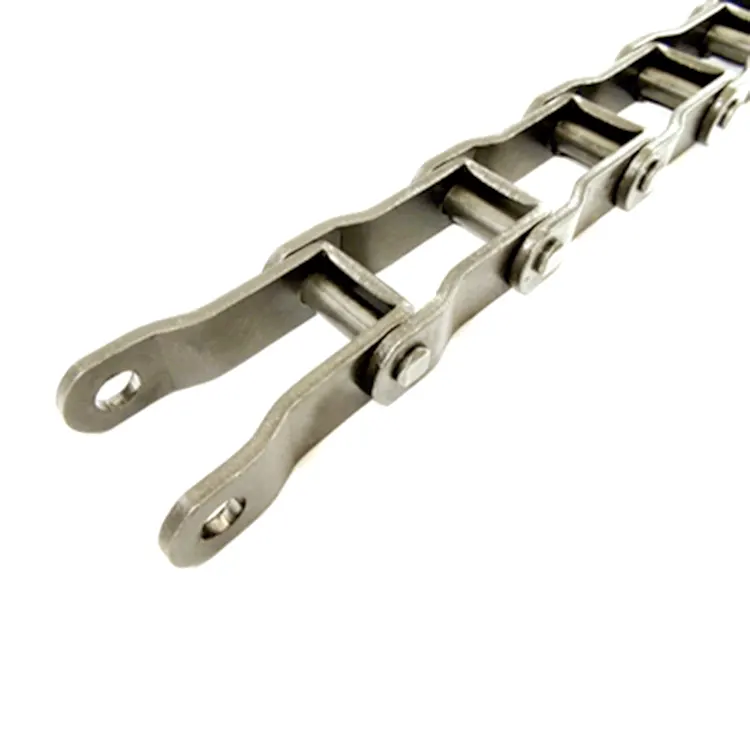
What materials are pintle chains typically made of?
Pintle chains are typically made from high-quality materials to ensure their durability and reliability in heavy-duty industrial applications. Here are the most common materials used to manufacture pintle chains:
- Carbon Steel: Carbon steel is the most common material used for pintle chains. It offers excellent strength and toughness, making it suitable for handling heavy loads and withstanding harsh conditions. Carbon steel pintle chains are cost-effective and widely used in various industries.
- Stainless Steel: Stainless steel pintle chains are preferred for applications where corrosion resistance is critical. Stainless steel contains chromium, which forms a protective oxide layer on the surface, providing excellent resistance to rust and corrosion. These chains are commonly used in food processing, pharmaceutical, and outdoor applications.
- Alloy Steel: Alloy steel pintle chains are formulated with specific alloying elements to enhance their mechanical properties. These chains offer improved strength, toughness, and wear resistance, making them suitable for demanding industrial applications.
- Plastic: In some cases, pintle chains are made from plastic materials, such as engineering-grade plastics. Plastic pintle chains are lightweight, corrosion-resistant, and ideal for applications where metal chains may not be suitable, such as in food handling or cleanroom environments.
The choice of material depends on the specific requirements of the application. For heavy-duty applications with high loads and harsh environments, carbon steel or alloy steel pintle chains are commonly used. In environments where corrosion is a concern, stainless steel pintle chains are preferred. Plastic pintle chains are chosen for their non-metallic properties, making them suitable for specific industries and environments.
In summary, pintle chains are available in various materials, including carbon steel, stainless steel, alloy steel, and plastic. Each material offers specific benefits and characteristics to meet the diverse needs of industrial applications.


editor by CX 2023-12-21