
Product Description
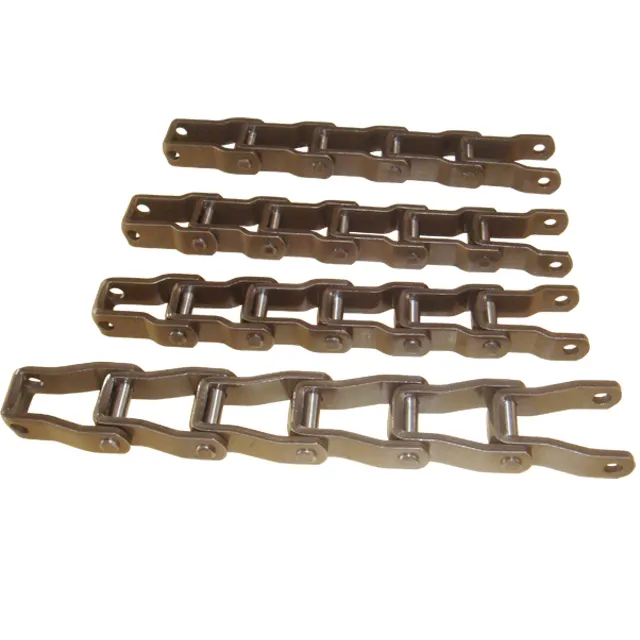
Steel Pintle Conveyor Chain With Attachment
AG Spreader, Grain Processing, Asphalt Paving, Sanding Truck Conveyor, Car Wash Conveyor, Forest Products
Model: 477,662,667X,667H,667J,667K,88K,D205,662H,667HX,D88C
Pack Detail:
Choose TAI
1. TAI with sophisticated CNC equipment, advanced technology and perfect inspection equipment produce all kinds of chains, sprockets and other transmission equipments which can make the customers’ trust. The company since its establishment has passed ISO9001 and other certifications.
2. “High quality, high benefit, high standards” to sing more integrated into the world. Adhering to the “good faith service to customers” purposes, from being in order to after-sales service, each bit closely link, TAI will provide the most intimate, comprehensive service.
3. “Meet the customers’ requirement, until customers’ satisfaction” is our goal from start to finish, better innovation and better cooperation can create better TAI to service the world. Let us work together, to create a better future with each other.
Welcome contact for more details.
| Chain No | Pitch | Ultimate tensile strength | Weight |
| mm | KN | kg/m | |
| 205 | 31.75 | 12.5 | 0.58 |
| 662 | 42.27 | 37.8 | 1.6 |
| 667X | 57.15 | 66.7 | 3.13 |
| 667H | 58.75 | 42.26 | 1.7 |
| 667J | 57.15 | 62.28 | 2.7 |
| 667K | 57.15 | 108.99 | 3.94 |
| 667XH | 57.15 | 124.6 | 4.48 |
| 88K | 66.27 | 108.99 | 3.91 |
| 308C | 78.11 | 222.42 | 9.8 |
/* March 10, 2571 17:59:20 */!function(){function s(e,r){var a,o={};try{e&&e.split(“,”).forEach(function(e,t){e&&(a=e.match(/(.*?):(.*)$/))&&1
| Material: | Carbon Steel |
|---|---|
| Structure: | Welded Chain |
| Surface Treatment: | Polishing |
| Chain Size: | 1/2"*3/32" |
| Feature: | Heat Resistant |
| Structure (for Chain): | Pintle Chain |
| Customization: |
Available
| Customized Request |
|---|
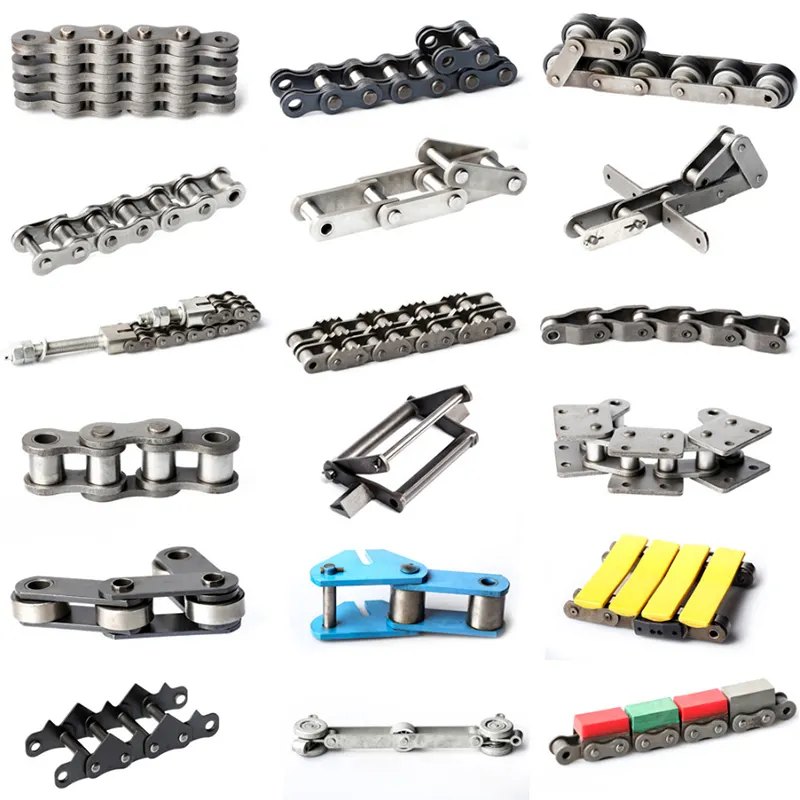
How do pintle chains handle shock loads and dynamic forces?
Pintle chains are designed to handle shock loads and dynamic forces common in industrial applications. Here’s a more detailed explanation:
Robust Construction:
Pintle chains are built with robust materials and construction, typically using hardened alloy steel. This construction provides the chain with the strength and durability needed to withstand shock loads and dynamic forces.
Flexible Design:
Pintle chains have a flexible design with open barrels, allowing for greater articulation between the chain’s components. This flexibility helps the chain absorb shock loads and adjust to dynamic forces, reducing stress on the chain and its attachments.
High Tensile Strength:
Pintle chains have high tensile strength, which enables them to resist breaking or elongation under heavy loads or sudden impacts. The chain’s strength is a crucial factor in its ability to handle shock loads without failure.
Superior Load Distribution:
As the chain articulates, the load is distributed across multiple points, preventing concentrated stress on individual components. This load distribution capability helps prevent premature wear and failure due to shock loads.
Well-Designed Attachments:
The attachments of pintle chains are designed to securely hold the product being conveyed while maintaining flexibility. This design prevents products from becoming dislodged or damaged during shock events.
Proper Lubrication:
Regular and proper lubrication is essential for pintle chains to reduce friction and wear, especially during shock loads. Adequate lubrication ensures smoother articulation and reduces the impact of dynamic forces on the chain.
Regular Inspections:
Frequent inspections help identify signs of wear or damage caused by shock loads. Regular maintenance allows for timely replacement of worn or damaged components, ensuring the chain’s optimal performance and reliability.
Conclusion:
Pintle chains are engineered to handle shock loads and dynamic forces through their robust construction, flexible design, high tensile strength, load distribution capabilities, well-designed attachments, and proper lubrication. Regular maintenance and inspections are crucial to preserving the chain’s integrity and performance in the face of demanding industrial conditions.
Can pintle chains be used in marine or underwater applications?
Yes, pintle chains can be used in marine or underwater applications, and they are well-suited for such environments due to their design and material options.
Pintle chains are known for their robust construction and ability to handle heavy loads, making them suitable for marine applications that require strength and durability. They are commonly used in marine equipment such as anchor chains, ship mooring systems, and marine propulsion systems.
The use of stainless steel in pintle chain manufacturing further enhances their suitability for marine and underwater applications. Stainless steel is highly resistant to corrosion from saltwater and other marine elements, ensuring that the chains maintain their performance and structural integrity even in harsh marine environments.
In marine applications, pintle chains may be exposed to seawater, humidity, and varying temperatures. Stainless steel pintle chains can withstand these conditions without succumbing to rust or degradation, providing reliable and efficient performance over extended periods.
Additionally, pintle chains are designed to handle side flexing, allowing them to navigate through sprockets and sheaves smoothly, which can be advantageous in certain marine applications where space is limited or complex routing is required.
Overall, pintle chains made from stainless steel are a preferred choice in marine and underwater applications due to their corrosion resistance, strength, and reliability, making them a valuable component in various marine equipment and systems.

How do pintle chains handle corrosion and chemical exposure?
Pintle chains’ ability to handle corrosion and chemical exposure depends on the material they are made of. Here’s a more detailed explanation:
Carbon Steel Pintle Chains:
Carbon steel pintle chains are the most basic and economical option. However, they are susceptible to corrosion when exposed to moisture, water, or certain chemicals. If used in corrosive environments, they may require regular maintenance, including proper lubrication and cleaning, to minimize the risk of corrosion.
Stainless Steel Pintle Chains:
Stainless steel pintle chains are highly resistant to corrosion and are well-suited for applications in harsh environments. Stainless steel contains chromium, which forms a protective oxide layer on the surface, preventing the chain from rusting or corroding when exposed to moisture, water, and many chemicals. They are particularly popular in food processing, pharmaceutical, and outdoor applications where hygiene and corrosion resistance are essential.
Alloy Steel Pintle Chains:
Alloy steel pintle chains are formulated with specific alloying elements to improve their resistance to corrosion and chemical exposure. They offer better corrosion resistance compared to standard carbon steel chains and are suitable for applications where stainless steel chains may not be necessary or cost-effective.
Plastic Pintle Chains:
Plastic pintle chains are non-metallic and inherently resistant to corrosion from moisture and chemicals. They are an excellent choice for applications where metal chains may not be suitable due to chemical compatibility concerns. Plastic pintle chains are commonly used in food handling, cleanroom environments, and other industries where corrosion and chemical resistance are critical.
Conclusion:
Pintle chains can handle corrosion and chemical exposure differently based on the material they are made of. Stainless steel and plastic pintle chains are the best options for applications where corrosion and chemical resistance are essential. For harsh environments, stainless steel chains offer excellent performance, while plastic chains are suitable for applications requiring non-metallic properties and chemical resistance. Proper chain selection and regular maintenance are essential to ensure optimal performance and longevity in corrosive and chemically exposed environments.


editor by CX 2024-01-03